PRECISION MACHINES FOR PRECISION CONNECTIONS

The Critical Role of Crimping in Wiring Harness
A Good Crimp - More than a Connection
CRIMPING TECHNOLOGY
Dhineshkumar R
2 min read
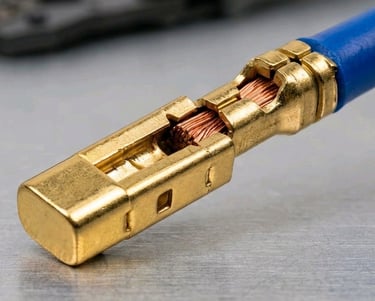
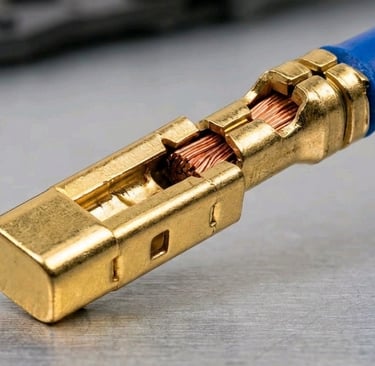
The Critical Role of Crimping in Wiring Harness
In wire harness manufacturing, it’s a common misconception that a crimp is just a simple physical mechanism to join a wire to a terminal. In reality, a crimp is a highly engineered, permanent electrical and mechanical connection.
When you look at a complex automotive or industrial wire harness, its overall reliability is entirely dependent on the integrity of individual terminations. A single sub-standard crimp can jeopardize an entire system, leading to expensive field failures, safety hazards, and damaged customer trust.
Quality in crimping isn't achieved by inspecting the final product; it is a strict process discipline that must be engineered into production from day one
The Anatomy of Perfect Crimp
A mathematically and mechanically sound crimp achieves an optimal balance between compression, electrical conductivity, and mechanical retention. Here is what a high-quality crimping process delivers:
Optimal Pull-Force Strength: The terminal barrel must grip the conductor strands tight enough to withstand high vibration, mechanical shocks, and pull loads during vehicle or equipment operation without backing out.


Minimized Electrical Resistance: Proper compression removes the air gaps between individual wire strands, creating a near-homogeneous mass of metal. This ensures maximum current flow and prevents localized hotspots or high resistance heating.
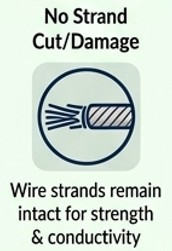
Zero Strand Damage: The crimping tool must compress the wire without nicking, scraping, or cutting the individual strands. Damaged strands decrease the cross-sectional area, reducing both mechanical strength and electrical capacity.
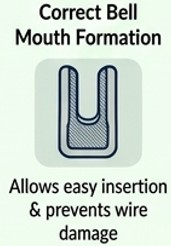
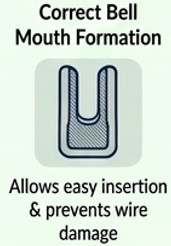
Correct Bell Mouth Formation: A subtle but critical feature, the bell mouth acts as a funnel at the rear of the conductor crimp barrel. It reduces stress concentration on the wire strands as they exit the terminal, preventing wire shear caused by flexing.
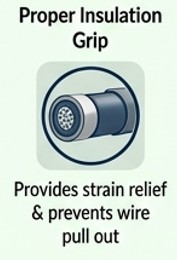
Robust Insulation Grip: The insulation crimp barrel must wrap firmly around the outer jacket of the wire. This provides essential strain relief, ensuring that any external tugging or flexing forces act on the insulation rather than the delicate electrical joint.

stable Current flow: The perfect crimp ensures overall current and vehichle reliability